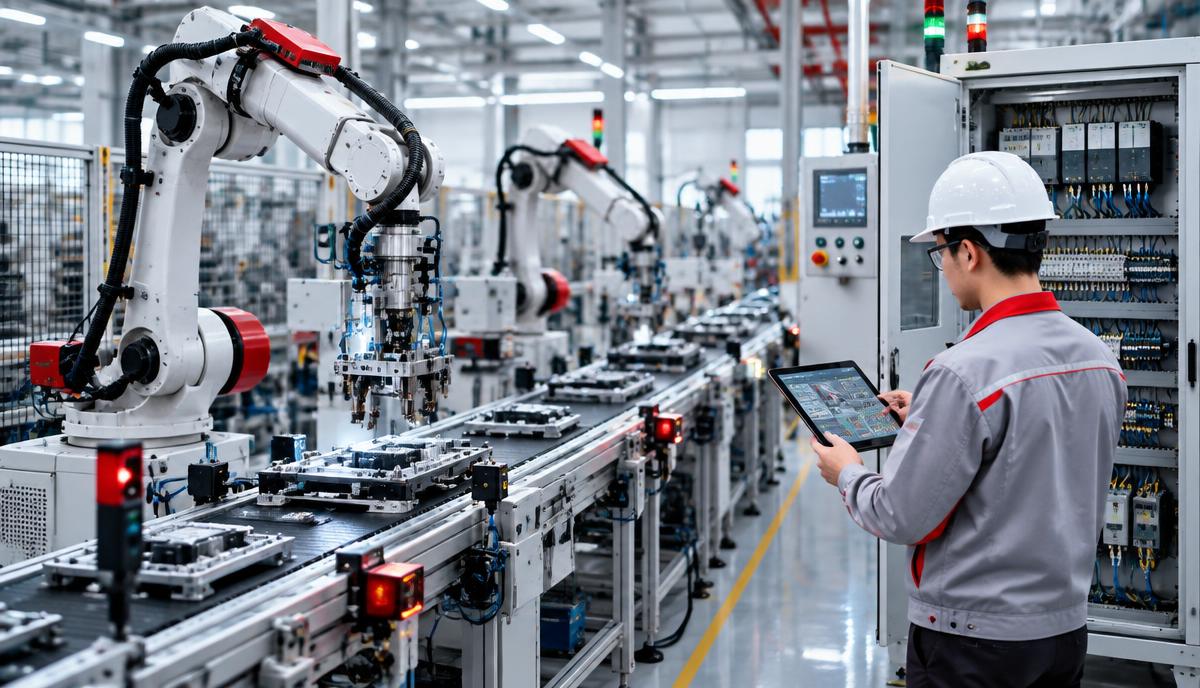
Automation system integration means connecting machinery, control panels, robots and monitoring software into a single, unified production line. This step is common when a factory expands output or upgrades aging equipment.
01System integration process
- Survey the current production line, identify bottlenecks and set output targets.
- Propose a solution: control equipment, sensors, robots, monitoring software.
- Design electrical drawings, communication network diagrams and control panels.
- Program the PLC, HMI and SCADA, and simulate trial runs at the workshop.
- Install on site, calibrate, run load tests and carry out acceptance testing.
- Train operators, hand over documentation and provide post-handover support.
02Factors affecting cost
- The number of control points, sensors and motors to be connected.
- The equipment brands used and the level of redundancy built into the system.
- Requirements for monitoring software, reporting and data connectivity.
- The allowable downtime for installation and changeover.
03Experience for project success
- Agree clearly on the scope of work and acceptance criteria from the start.
- Choose equipment that is widely available in the Vietnamese market for easy replacement.
- Prepare a contingency plan for the line changeover period.
- Train an in-house maintenance team to quickly handle common issues.
See Tam Phat JSC's automation projects already completed, or contact us for advice on your production line.